
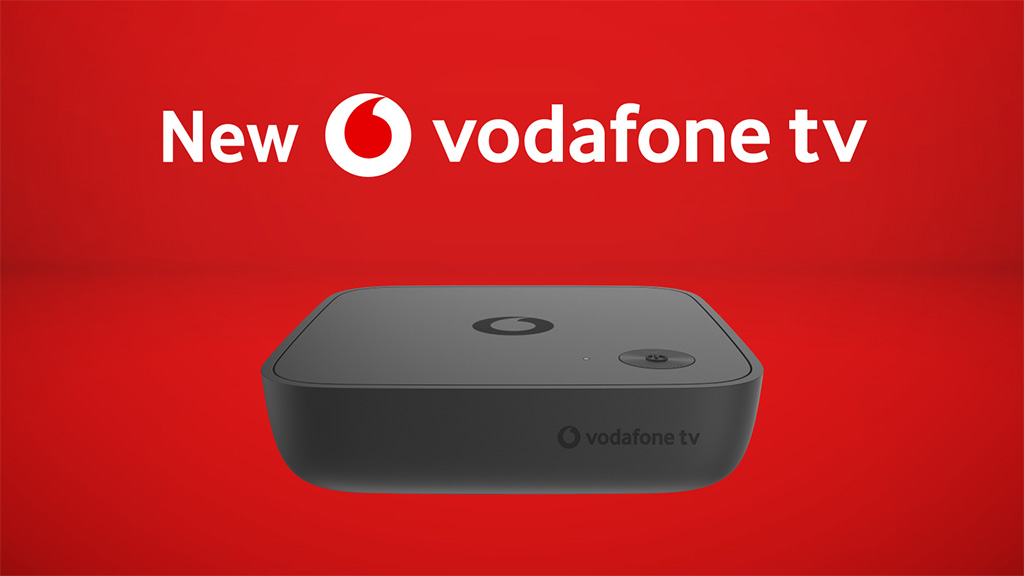
Vodafone TV is now available in the United Kingdom, bringing together Freely with online video services and other entertainment through a set-top box powered by Netgem. It marks the latest attempt by Vodafone to add television to its connectivity proposition, more than a decade after it first planned to launch a television service in the United Kingdom.
The service is available to Vodafone mobile or broadband customers, directly from Vodafone and through Currys stores nationwide. Customers switching both their broadband and television service can receive credit of up to £300 towards early termination charges, while the broadband connection can be transferred using the One Touch Switch process.
Vodafone says its research found that more than a third of people had not changed their television provider in the last five years, with the perceived inconvenience of switching and concerns about exit fees among the reasons.
“Households are dealing with a TV set-up that’s become far too complicated,” said Rob Winterschladen, Consumer Director, VodafoneThree, citing “multiple apps, long channel bundles and services they often don’t use”.
“Vodafone TV gives customers a smarter alternative: one simple, intuitive experience that brings their favourite entertainment together and helps them cut out unnecessary costs.”
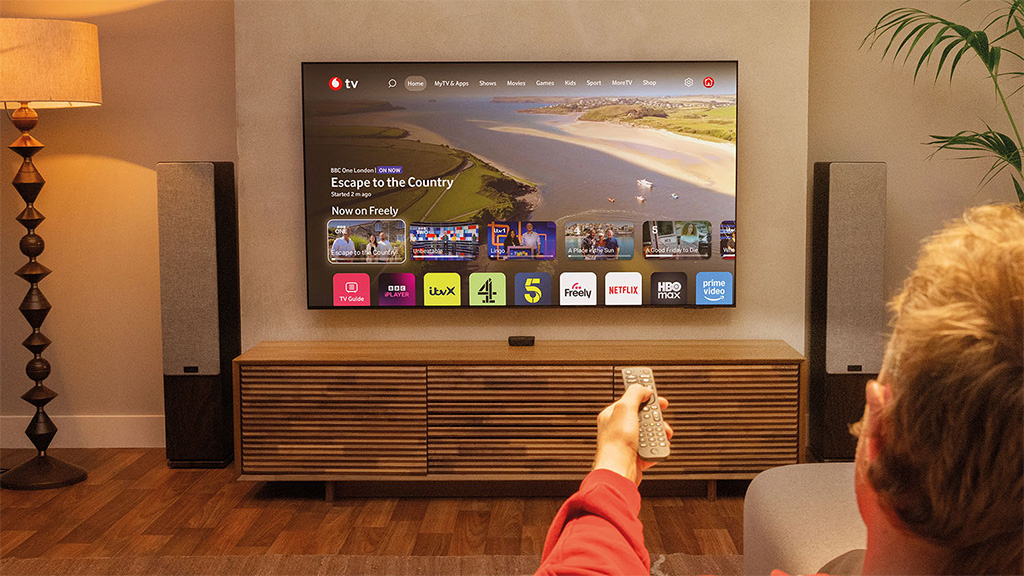
The television service is offered on a 24-month commitment. The basic package starts at £10 a month, while Vodafone TV Essential costs £17 a month and includes the advertising-supported versions of Netflix and HBO Max.
Freely is built into the platform, providing more than 70 live channels and on-demand programming from the main British broadcasters over an internet connection, without requiring an aerial or satellite dish. Other streaming applications are available through the Google Play Store.
As informitv previously reported, the Vodafone TV service is powered by Netgem, based on its PLEIO platform. That enables Vodafone to offer a branded television proposition without developing its own television platform.
It is not the first time that Vodafone has had ambitions to offer television in the United Kingdom.
More than a decade ago, Vodafone was building a fixed broadband and television business across Europe as part of a strategy to become a full-service communications provider.
By 2015 it already had 11.3 million broadband customers and 9.1 million television customers across Europe. Its annual report that year said it would launch consumer broadband in the United Kingdom within weeks, “with TV to follow later in 2015”.
The broadband service duly launched in June 2015, but the television service did not.
The planned launch was repeatedly delayed. In 2016, Vodafone finally put its British television plans on hold, saying its focus was on growing broadband and that it would look at launching television “when we deem it necessary and commercially appropriate”.
Vodafone subsequently experimented with a lighter approach to television and entertainment. In 2020 its Vodafone Together proposition combined unlimited mobile data and home broadband with an Apple TV 4K and a year of Apple TV+. Customers could also add entertainment packages.
Six years later, Vodafone has concluded that a more complete television proposition is commercially appropriate after all.
The difference is that it does not require the level of commitment that might once have been associated with launching a television platform.
Vodafone is not investing in its own television delivery platform or commissioning exclusive programming. Netgem provides the underlying television platform and set-top box proposition, while Freely provides the internet-delivered free television offer from the main British broadcasters. Global streaming services provide much of the premium programming.
Vodafone can concentrate on providing the connectivity, packaging the services and managing the customer relationship.
That potentially makes television a relatively limited and low-risk extension of its existing business. Distribution through Currys also takes the proposition beyond Vodafone’s own stores and online sales channels and places it in front of consumers shopping for televisions and other home entertainment products.
It nevertheless puts Vodafone into more direct competition with established television providers including Sky, Virgin Media and BT, particularly as television distribution increasingly moves online.
The use of Freely is significant in that respect. Freely is designed to make the main British television services freely available over an internet connection. Vodafone demonstrates that the same platform can also form the free-to-air foundation of a commercial television bundle.
There is nothing particularly novel about free television channels forming part of a pay television proposition. Freeview channels have long been available alongside subscription services. What is different is that the entire proposition can now be delivered over an internet connection, without Vodafone needing its own broadcast distribution infrastructure.
It also makes changing provider potentially easier. A customer moving broadband and television services no longer necessarily needs a new aerial, satellite installation or cable connection. Vodafone is explicitly addressing the remaining contractual obstacle by offering to contribute towards the cost of leaving another provider.
For many years the rise of standalone streaming services appeared to weaken the traditional idea of triple play. Consumers could buy broadband from one provider and subscribe independently to entertainment services delivered through applications on almost any connected television.
Yet the move to internet delivery may also make the television component of the bundle easier for communications providers to offer.
A provider no longer needs to own a television network, develop a proprietary platform or invest substantially in programming. It can combine connectivity with third-party technology, free television and subscription streaming services, while providing a single interface and customer relationship.
Vodafone may therefore be returning to an old idea through a rather different model.
More than a decade after it first planned to add television to its British broadband business, Vodafone TV has finally launched. Perhaps the concept of triple play was not dead after all. It may simply have been waiting for television to become another service delivered over the internet.