
While some European countries are considering the long-term future of digital terrestrial television, broadcasters in Spain are investing in its development with the launch of new Ultra High-Definition services. Three national channels, La 2, Antena 3 and Telecinco, have begun UHD broadcasts, joining the existing La 1 UHD service. The expansion is accompanied by the introduction of UHD broadcasting by the Catalan public broadcaster TV3, demonstrating a continuing commitment to terrestrial television as a platform for delivering higher-quality pictures and sound.
The new services represent a significant expansion of free-to-view UHD broadcasting in Spain, involving both public service and commercial broadcasters. La 1 and La 2 are operated by the public broadcaster RTVE, while Antena 3 is part of Atresmedia and Telecinco is operated by Mediaset España.
Regional broadcasters are also adopting UHD. TV3, part of the 3Cat public media group in Catalonia, has introduced regular UHD transmissions, following Televisión de Galicia, which became the first Spanish regional broadcaster to launch regular UHD services in March 2025.
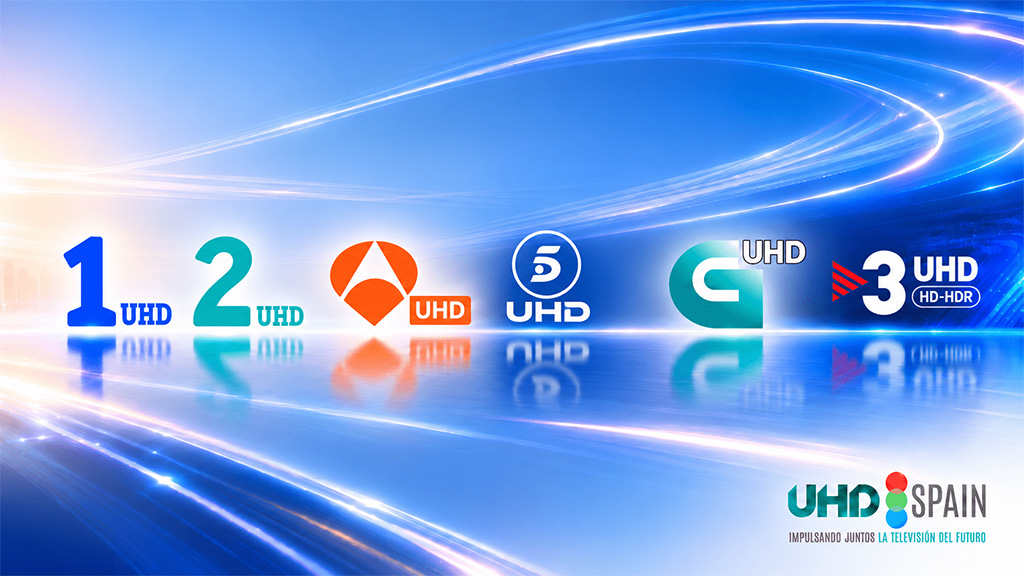
The expansion forms part of a wider modernisation of the digital terrestrial television platform in Spain, making use of DVB-T2 transmission technology to support UHD services. Viewers require a compatible DVB-T2 UHD television or receiver and may need to retune their equipment to receive the additional channels. Existing HD services remain available to viewers without compatible UHD equipment.
The investment follows the approval of a new National Technical Plan for Digital Terrestrial Television by the Spanish government in March 2025. The plan establishes a two-stage transition to DVB-T2, initially introducing UHD simulcasts of existing services before extending the technology across national, regional and local terrestrial networks. The second phase will begin once sufficient receiving equipment is available in Spanish homes. The government says the transition will allow terrestrial broadcasters to compete more effectively with services delivered by satellite and over the internet.
Terrestrial television remains particularly important in Spain. According to the national competition and markets regulator CNMC, DTT accounts for over 70% of linear television viewing, despite the growth of subscription streaming and other online audiovisual services.
In August 2026, the regulator described DTT as the principal means of accessing television news and many events of general interest, supported by its virtually universal coverage and free-to-air availability. The wholesale terrestrial transmission market generated approximately €173 million in revenue in 2025.
The transition is taking place against a background of declining linear television consumption. Average daily viewing fell to 154 minutes in 2025, down from 163 minutes the previous year, according to audience research company GECA. Nevertheless, the continuing reach of terrestrial television gives Spanish broadcasters a substantial existing audience for UHD services, without requiring viewers to subscribe to a broadband or pay-television platform.
The industry association UHD Spain has welcomed the launches as an important development for free-to-air television. Established in 2021, the organisation brings together broadcasters, network operators, equipment manufacturers and technology companies to promote the adoption of UHD, including higher resolution, high dynamic range and improved audio.

The developments provide a contrast with the debate in other European markets over the future of terrestrial broadcasting, where the increasing use of online delivery is prompting questions about the long-term role of digital terrestrial transmission networks. In Spain, broadcasters are demonstrating that terrestrial television can continue to evolve, offering UHD services alongside existing HD channels.