
Sky has launched Your Multiview in time for the new football season, offering a way for sports fans to watch up to four live Sky Sports events simultaneously on a single screen. Multiview represents a long-standing ambition of interactive television. The BBC and Sky pioneered multiscreen viewing with Wimbledon coverage over a quarter of a century ago, but the technology available today makes it more practical.
Sports fans no longer have to choose between the biggest live events as Sky launches ‘Your Multiview’, allowing customers to watch up to four live Sky Sports events simultaneously on one screen. There is no need to switch channels or reaching for a second screen.
Your Multiview, available on Sky Glass, Sky Stream and Sky Q, enables subscribers choose up to four live Sky Sports events and watch them side by side on a single screen.
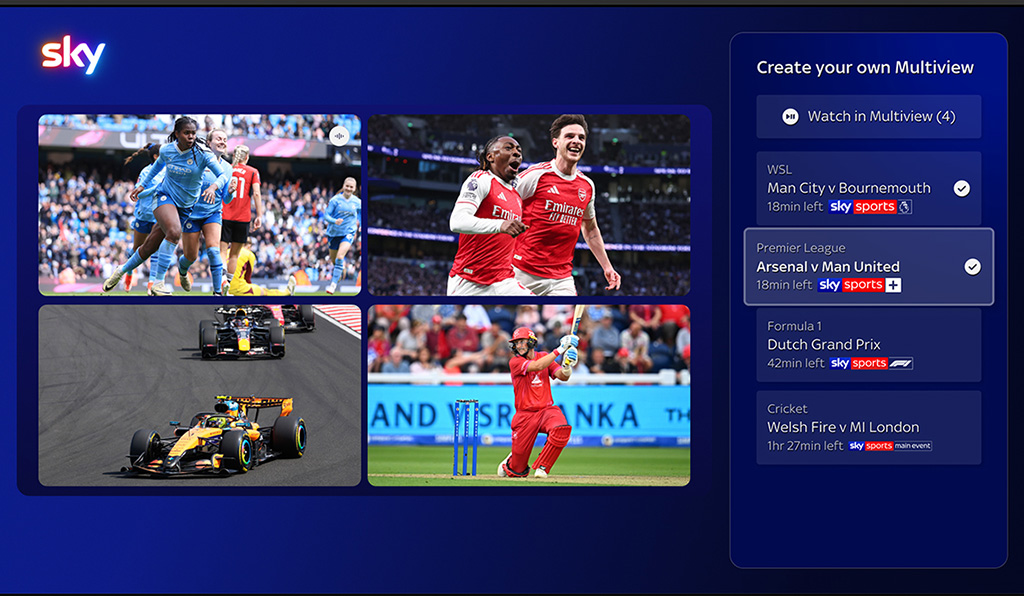
Viewers can follow football matches from across the Premier League, EFL, SPFL, or WSL at once, or stay across a packed day of live sport spanning football, F1, cricket, tennis, golf, NFL and rugby – all without switching channels or checking for results elsewhere.
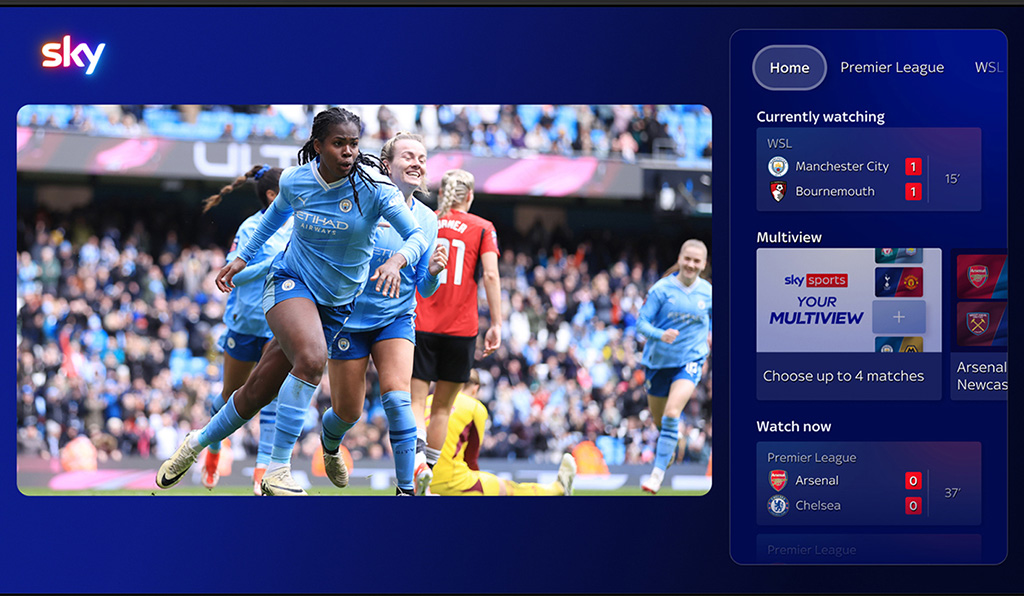
The new feature allows viewers to spotlight an event to change the on-screen layout, select the audio they want to hear, and switch any event to full screen when it’s the one they don’t want to miss.
“There’s more live sport for fans to enjoy than ever, and we want to make it as easy as possible to follow all the action,” explained Carli Kerr, the managing director of Sky TV & NOW. “With Your Multiview, viewers no longer have to choose between the biggest moments happening across multiple channels. It could be two exciting football matches happening at the same time, or Super Sunday coinciding with a Grand Prix and the final day of a golf Major.
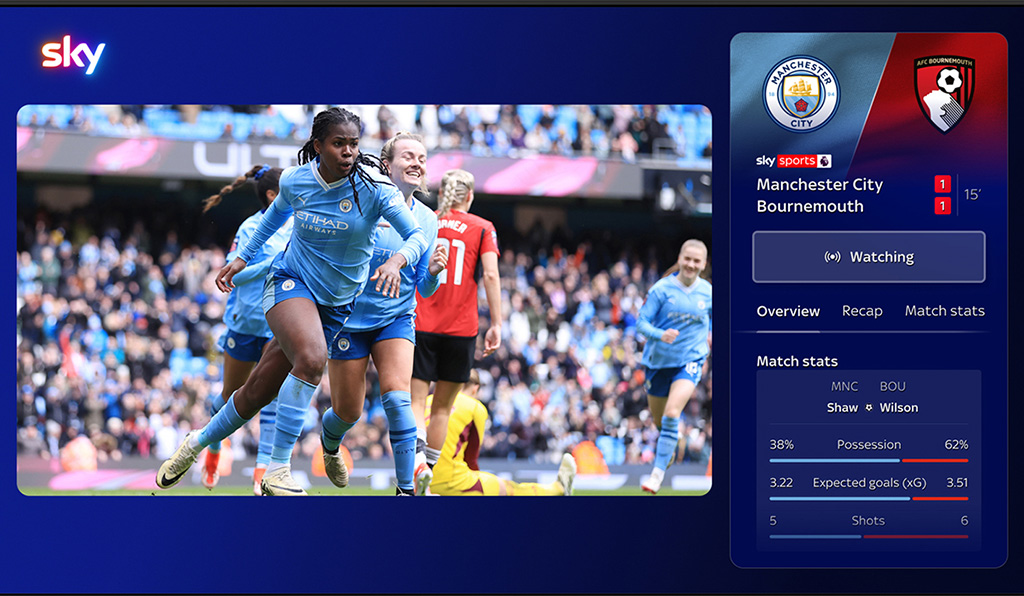
“Only on Sky can fans enjoy so much sport together on one screen and stay in control of what they watch. Along with scores, stats, and clips at the touch of a button, this is another way we’re making Sky the best place to watch live sport.”
It is a new take on an old idea. Multiview represents a long-standing ambition for interactive television: allowing viewers to move beyond the single editorial viewpoint and take more control over how they experience live sport. Sky Sports Active offered something similar as early as 1999.
More than 25 years ago, Wimbledon provided one of the first major demonstrations of the potential of interactive television. The Wimbledon Interactive service, developed by the BBC during the early years of digital television, allowed viewers to follow multiple courts and access live scores from across the courts. The award-winning service became one of the flagship examples of how digital television could offer something more than a traditional channel experience.
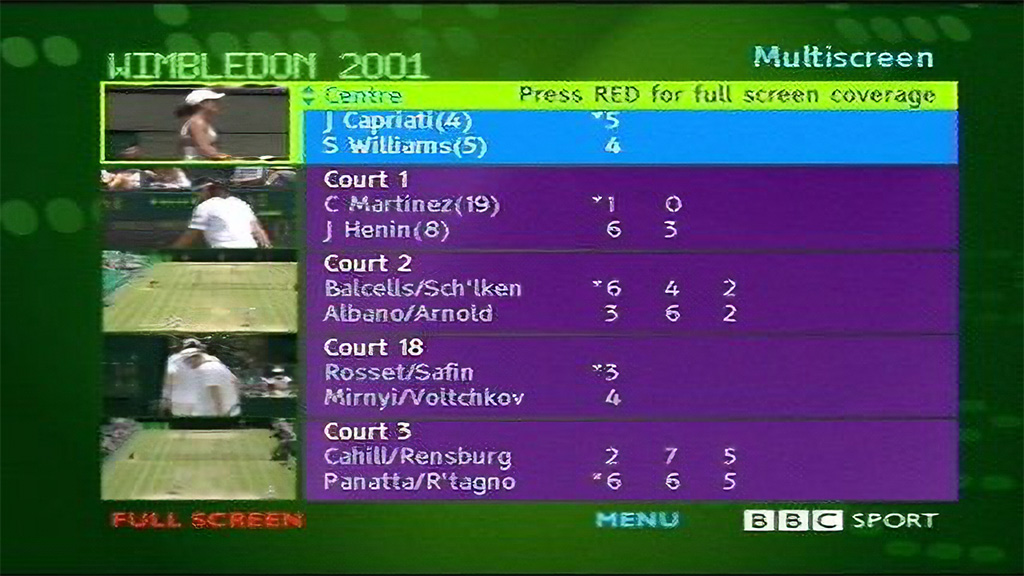
The appeal was clear, and it proved very popular at the time. A tennis tournament is not a single event. It is a collection of simultaneous stories. The most interesting match for one viewer may be a secondary court for another. It gave viewers more choice and was simple to use. More significantly, it worked across multiple platforms: satellite, cable, and terrestrial television.
The same approach was applied to other major sporting events, like the World Cup, the Olympics, and the Commonwealth Games.
Yet it was a technical trick. The multiple pictures were a broadcast mosaic that was assembled as part of a single signal, and each separate stream required its own television channel. It may have looked like the future of television, but at the time it was difficult to deliver.
Modern technology makes it much easier to assemble multiple streams dynamically in a custom view. Instead of a broadcaster creating one additional mosaic channel, the viewer can create a personal combination of available streams.
Microsoft pioneered this with their Mediaroom platform back in 2007, almost twenty years ago, which offered what it called dynamic MultiView capabilities with multiple picture-in-picture views.
Sky is not simply offering a four-way split screen. It describes the feature as putting fans in control of how they watch. A viewer can combine football matches from different competitions, or follow different sports including Formula 1, cricket, tennis, golf, NFL and rugby. The viewer can then decide which event receives their attention at any moment.
It is like having a master control room in the home. That raises a question that the television industry has wrestled with for years: do viewers really want to become directors?
There have been many attempts to give audiences more control over live events. Choose-your-view services have offered alternative camera angles, statistics, commentary options and additional streams. They have often demonstrated that some viewers value the extra choice. Yet many viewers still prefer to sit back and trust the editorial judgement of a skilled production team.
Sky is not alone in exploring this direction. YouTube has introduced its own Multiview feature, allowing viewers to watch up to four live streams simultaneously on one screen. The service has been used for sports including NFL Sunday Ticket, where viewers can select combinations of games and switch audio or move into full-screen viewing.
The early promise of interactive television was that audiences would have more control over their viewing experience. The reality proved more complicated. Most viewers still value great editorial decisions.
Traditional broadcasters and online platforms are converging on a similar idea: the screen is becoming a flexible canvas rather than simply a window onto a single channel.
The question remains as to whether the average viewer will want to watch more than one sport at a time, but the ability to keep an eye on multiple event at a time and flick seamlessly between them remains an enduring element of the interactive television proposition. It has now become so normal that it is no longer described as interactive.