
For all the discussion about the future of digital terrestrial television in the United Kingdom, there has been less consideration about what will happen about satellite television reception. However, time may be running out.
Unlike the debate about digital terrestrial television, the future of direct-to-home satellite distribution is determined by the availability of satellites and their orbital position.
For decades, geostationary satellites at 28.2°E and 28.5°E have delivered television to the United Kingdom. This orbital position is used for all Sky TV and Freesat services. The satellite dishes used to receive these services are all pointed at this particular spot in the sky.
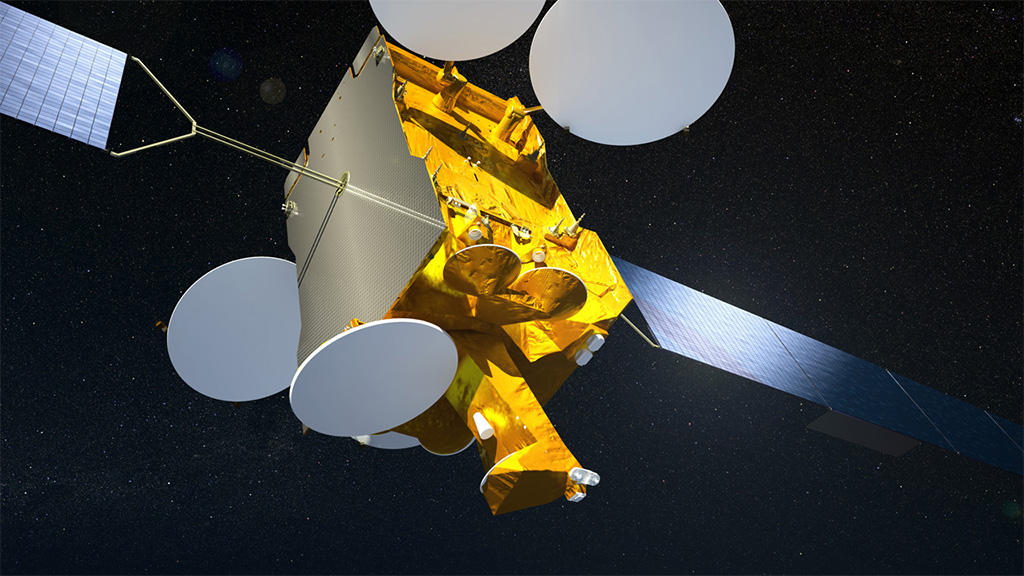
The main satellites currently involved, Astra 2E, Astra 2F, and Astra 2G, owned by SES, were launched between 2012 and 2014. With planned mission durations of 15 years, these spacecraft often exceed their design life by 2-3 years or more, but they are expected to reach end of life around 2030-2032.
One of the key factors is the amount of fuel available for station keeping within their orbital box of about plus or minus 0.15 degrees.
At the end of their operational lives, geostationary satellites they are generally repositioned out of the way in a graveyard or disposal orbit, a few hundred kilometres further out.
It is possible to reposition satellites from one orbital position to another, for instance from 19.2°E to 28.2°E, to repurpose them. However, that may not be a practical proposition.
This constellation of Astra satellites at 28.2°E includes spot beams that are aimed specifically at the United Kingdom and the Republic of Ireland, which provides a degree of geographic limitation for free-to-air unencrypted services. This includes services for the BBC, ITV, Channel 4, and Channel 5.
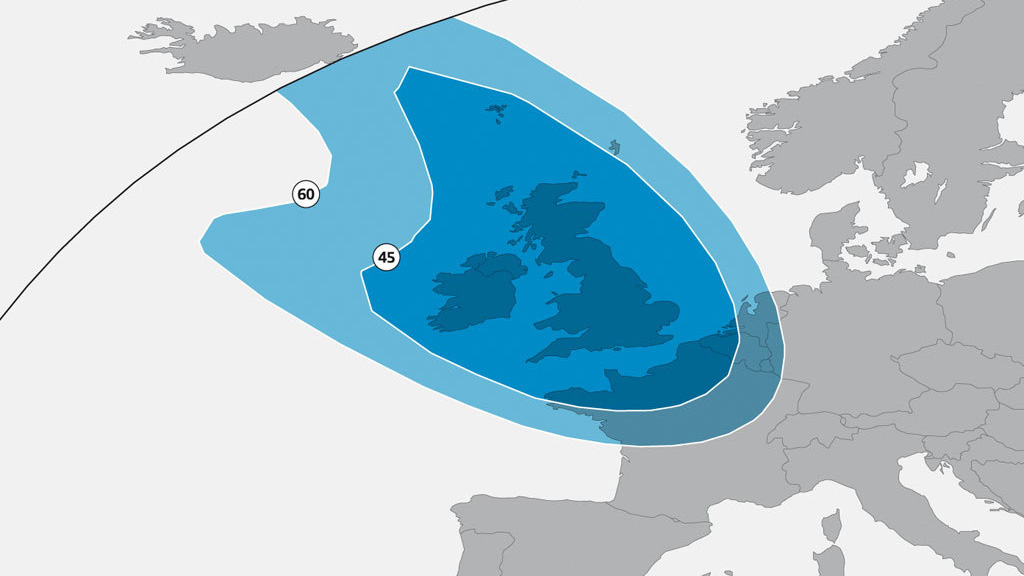
The same spacecraft also carry transponders that serve other markets in across Europe, the Middle East, and West Africa. Between them, they serve over 40 million households, although the majority of these are delivered through cable or teleco television headends, with about 11.7 million relying on direct-to-home reception.
In the United Kingdom there are about 6 million Sky homes that use satellite and about 0.8 million that use Freesat. Over time, some of these may migrate to online options like Sky Stream and Freely, but one way or another, time is running out.
Replacing satellites is an expensive business, requiring an investment of hundreds of millions of pounds. It also takes time and is not without risk.
Although SES is far from dependent on British broadcasters for its business, strategic decisions about the future of television distribution will need to be taken soon.
In October 2024, Sky announced a major, long-term renewal with SES to continue broadcasting from 28.2°E and 28.5°E until 2029. Beyond that, the future seems uncertain.
British public service broadcasters would no doubt prefer not to pay for satellite distribution and instead have viewers pay their internet service providers to access their channels online.
One of the reasons is that satellite distribution requires multiple versions of a channel to serve different regions, either for regional news or different advertising markets.
The problem is that there is little incentive for consumers to switch from satellite to online. Internet services are already available to them for viewing on demand.
From a public policy perspective, satellite provides a reasonably reliable and relatively low-cost way of providing almost universal reception that is not dependent on internet infrastructure.
While the government would no doubt like everyone to be connected to a digital network, the scale of the challenge seems to be largely unrecognised, with an assumption that the market will address this.
18 months after launch, Freely celebrated a million active users over Christmas. So, it still has some way to go.