
Matt Brittin is beginning to set out how his leadership of the BBC may differ from that of his predecessors. The first major interview with director general was promoted on BBC outlets but significantly was also posted in full on YouTube. The former Google executive says he wants to remain true to the public service mission of the BBC while being “really radical” about how it is delivered. That could mean fewer conventional channels and services, more investment in iPlayer and other digital platforms, and a more data-informed approach to understanding what the BBC produces and how well it serves its audiences.
“I want to be really radical in reinventing how we deliver that mission, but stay true to that mission,” Brittin said in an extended BBC interview, four months after taking over as director-general.
It is a distinction that runs through much of what the new director general says. He is strongly defending the purposes and value of the BBC, while being noticeably less protective of the forms through which they have traditionally been delivered.
“We wouldn’t guarantee any programme or any channel will exist forever,” he said. The immediate financial pressure means some decisions may need to be taken sooner, but he argues that changing audience behaviour would require them in any case.
Brittin offered a hypothetical example of a service attracting 100,000 people to its broadcast output but 500,000 to the same programmes on iPlayer. “When’s the right time to migrate that service fully to being on demand?” he asked.
That suggests a subtle change in the unit of thinking. Rather than starting with an existing channel or service and asking how it can be preserved, Brittin starts with the audience and asks how the BBC can most effectively serve it.
“We’re locked into yesterday’s model of how people consume content,” he said. “And actually the audience is already living in tomorrow’s world.”
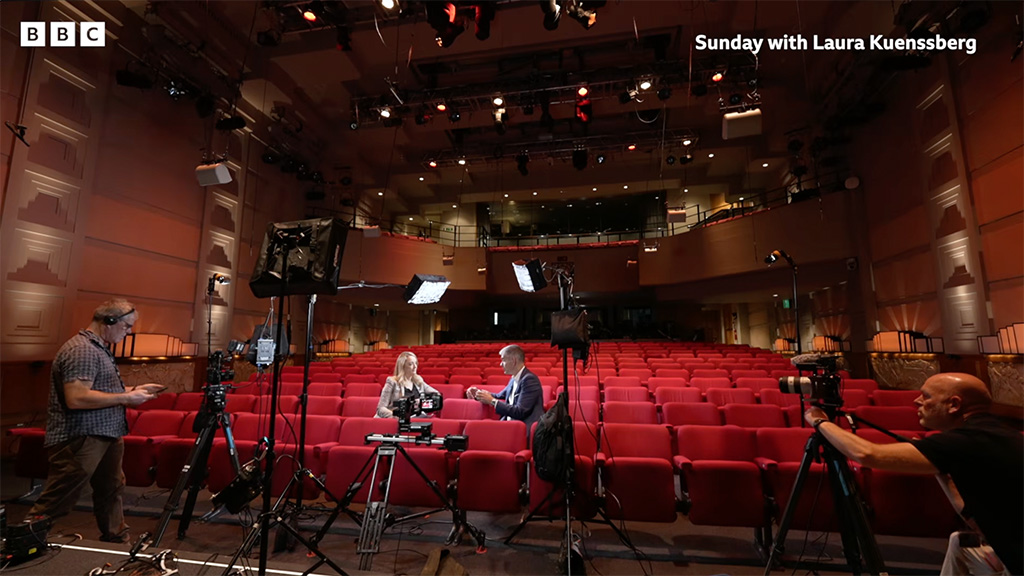
His background inevitably informs that view. Brittin spent almost two decades at Google and ran its European operations, having previously been responsible for YouTube across Europe, the Middle East and Africa. He makes no attempt to disguise his status as an outsider at the BBC.
“What I’d like to bring from that experience is that sense of serving audiences and that sense of experimentation and learning and moving faster,” he said, repeating his call for the BBC to be closer to audiences, simpler and faster.
That may be particularly significant for iPlayer. Brittin says investment in programmes and channels has delivered audience impact but acknowledges that BBC technology has not necessarily kept pace.
He sees discovery as central to the public service role of iPlayer. In traditional television, scheduling could lead an audience from one programme into another. Brittin argues that digital recommendations can perform a similar function, offering the example: “Come to iPlayer for Scooby-Doo, stay for Horrible Histories.”
That is rather more interesting than simply making iPlayer more like Netflix. It suggests using recommendation and personalisation to reproduce some of the serendipity and editorial purpose previously provided by a television schedule.
At the same time, Brittin does not believe the BBC can rely solely on its own destinations. “BBC content should be on Netflix, on YouTube, on TikTok, on Spotify and Instagram, and everywhere where audiences are,” he said.
That creates an apparent contradiction at the centre of his strategy. The BBC needs to be present on the global platforms to remain relevant, while maintaining a direct relationship with audiences that does not depend on them.
Brittin says BBC apps and services should be “the antidote to the algorithm”, contrasting their public service purpose with platforms driven by commercial interests in engagement, advertising or data.
Coming from a former Google executive, his assessment of the strategic risk is striking. “There’s a danger that six companies will control access to information in future and the creation of information and misinformation,” he said. “Six companies, none of them European, let alone British.”
Yet when pressed on whether he trusted technology platforms, he was pragmatic rather than ideological. “I wouldn’t trust any platform innately,” he said, while acknowledging that the scale of YouTube means the BBC cannot avoid working with it if it wants to reach audiences.
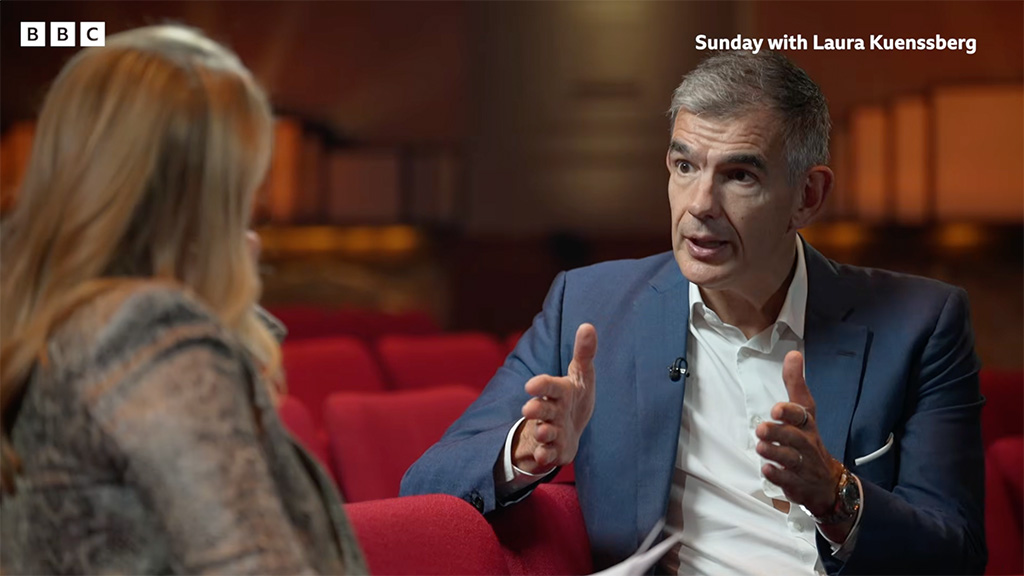
Perhaps more revealing of how Brittin may change the BBC is a brief discussion about measurement towards the end of the interview.
He notes that the BBC produces around 66 live breakfast shows each day but that he cannot readily determine how many covered a particular story. At YouTube, he did not know what was in every video either, but he had data that enabled the company to understand its output.
Brittin wants “a better way of understanding our output and listening to audiences where they have concerns and complaints and being more transparent”.
That need not mean chasing ratings or allowing algorithms to determine what the BBC commissions. Better measurement can equally expose services that are expensive relative to their impact, identify programmes that audiences struggle to discover, or reveal where the organisation is duplicating effort without necessarily adding public value.
The Google influence on the BBC under Brittin may therefore prove less conspicuous than artificial intelligence or putting more programmes on YouTube. It could be a culture of measurement, experimentation and iteration, with fewer assumptions that existing services should continue simply because they exist.
There is an obvious risk. Public service media cannot be reduced to an optimisation exercise, because some of its most important output exists precisely because the market would not otherwise provide it. Brittin appears conscious of that distinction.
His emerging proposition is that the BBC should be uncompromising about its mission but much less sentimental about the machinery used to fulfil it. If he follows that through, the BBC of the next decade may be defined less by its portfolio of television channels and radio stations and more by the relationship it can establish with audiences across its own services and those of others.