
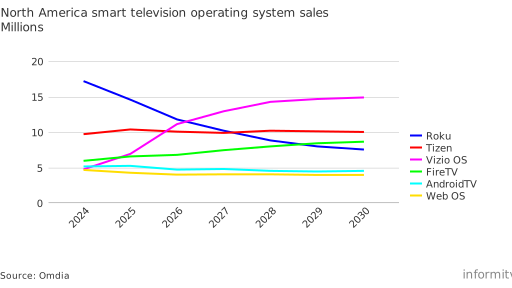
Vizio OS is expected to overtake Roku in television sales in North America. The competitive landscape of television operating systems is shifting from manufacturers to a broader competition involving retail, media, and technology companies. Sales of televisions alone no longer generate significant profits, while competition from Chinese manufacturers is driving down prices and steadily capturing market share.
Competition in the television operating system market was previously led by Google with Android TV, Samsung with Tizen, and LG with webOS. They are now being joined by companies from the retail and media market that are buying their way in.
Research from Omdia suggests that market share trends for Vizio OS and Roku will be critical leading indicators for the competitive dynamics in the smart television ecosystem.
Walmart acquired smart television manufacturer Vizio for $2.3 billion in 2024, establishing it as a wholly owned subsidiary of the retail giant, withdrawing it from all third-party retail channels.
As Ken Park of Omdia observes, this was a case of a retailer using consumer data to create new advertising revenue streams and e-commerce opportunities. Walmart could use purchase data to identify a consumer, connect that insight with viewing behaviour, and serve targeted advertising. That could increase sales at Walmart and provide sales data to support other advertising campaigns.
Walmart also recently announced the acquisition of television advertising technology company Vibe.co for around $1.4 billion.
Meanwhile, the recently announced acquisition of Roku by Fox was valued at $22 billion, more than nine times that of Vizio by Walmart.
Interestingly, Omdia forecasts that Vizio will increase its share of sales in North America at the expense of Roku, while FireTV is expected to gain further share.