
In a speech to the Royal Television Society, the departing director general of the BBC said the game is not over. “Don’t believe the doom mongers, the game is not up,” he said. “There is still all to play for.” Yet he will be off the pitch, looking for a new game. His departure could not come at a worse time for the BBC, which faces more challenges than ever.
“There is no inevitable death spiral: we are not simply victims of circumstance, we can shape things.”
“The BBC is in the game, a beautiful UK success story,” he said. Yet “Without intervention, without ambition, we will diminish a national asset and destroy value for the UK. Gone forever.”
“Our vision is simple: to be the only market-leading public service media organisation globally. In a club of one. Growing not declining. Our best days ahead of us.”
How does that work? The BBC wants to be the only market-leading public service media organisation in the world? It wants to see other public service media companies diminish so that it can thrive? Or it wants to define success by defining its category as being the one in which it is the last one standing?
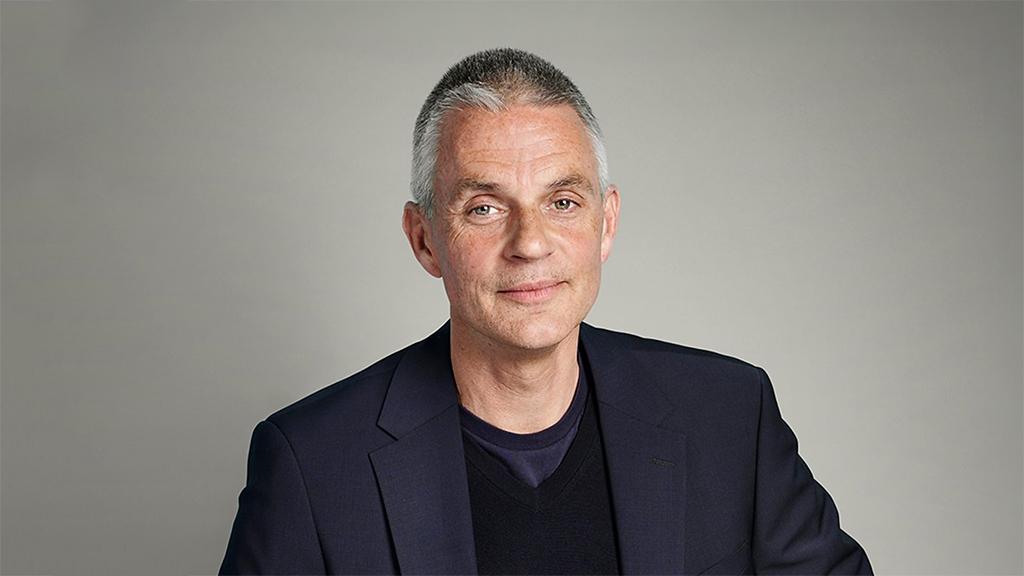
His valedictory speech to the industry was resolutely optimistic, with no reference to the reason for his resignation. That was an editorial failure that produced an unprecedented lawsuit from the President of the United States that is still unresolved. Yet the real reason was probably that he sensed that the real challenge is yet to come.
He is leaving at a most unfortunate time for the corporation, which will be left to argue the case for the right to exist and a form of funding that will enable it to survive and thrive in the future.
Although the BBC is not under immediate threat, its position looks more precarious than at any time in its hundred-year history. Not that it will disappear, but its importance has diminished and it seems to have had no clear vision for some time.
Part of the problem is that the core purpose of the BBC, originally constituted to inform, educate, and entertain, is less clear than ever.
The former marketing man restated this as “to provide engaging, intelligent content and services which: pursue truth with no agenda, offer homegrown UK storytelling and drive the local creative economy, and help bring us together not drive us apart”.
Not exactly catchy, is it?
“These resonate with people because they are clearly in the interests of those we serve,” apparently. They are all laudable aims, but it is not clear how they are uniquely distinctive.
How they justify programmes like Bargain Hunt, other than to wake people up in time for the lunchtime news. It is not clear why the BBC needs half a dozen national television channels and ten national radio networks if the BBC iPlayer and Sounds really are the online future.
“Partnerships like Freeview have been critical,” he said. He did not mention its replacement, Freely. Sometimes what is not said is significant.
Products like iPlayer are competing successfully with international players, he said. Yet iPlayer looks very similar to many other online video services these days.
He repeated the suggestion that the iPlayer should include programmes from other public service broadcasters like Channel 4, which already carries programmes from the UKTV channels that are owned by the BBC.
Why Channel 4 would want to put its programming on iPlayer not clear, but he did concede that the BBC should not own Channel 4. It is difficult to see how it could or what benefits that would bring. Notably he did not mention ITV, which is being courted by Sky.
And no mention of Channel 5, after all that is owned by Paramount.
The BBC wants to be a world leader in the specific area of creative technology, he claimed. It has established MediaTech, bringing together its technology, product, and research and development teams as what he described as a global centre of excellence.
Yet the BBC is competing with the likes of Google, Apple, Amazon, and Netflix. The BBC may be in the game, but they are playing in a different league.
The BBC may finally recognise that the game is up for the television licence.
“We have defied gravity to stay relevant and maintain a universal reach in the face of huge shifts with these radical changes in the media market and audience behaviours, we’ve done well,” he said. “But our current funding model was designed for a different era.”
“We need change to deliver sufficient funding that’s sustainable and fair. Without reform, the BBC will no longer be able to deliver on its purposes. It will be sitting on a melting iceberg.”
The current BBC charter ends at the end of next year. He argues that rather than facing renewal every ten years, the next charter should not have an end date, although he recognises that does not mean the BBC should have an automatic right to exist.
“But the situation is clear: unless we act, we will quickly squander an unparalleled opportunity to create a stronger, more participative UK,” he concluded. “Let’s be ambitious, let’s intervene. Take a swing. If not now, when? It will be too late.”